
Mobbeal
VIE Tokyo: Hugo, fullstack developer, left after 3 years at Toyota France.
26 years old, on VIE at Abbeal Tokyo since October 2025 on an IBM HCL Commerce (Java + JSP) e-commerce mission. How his Toyota Motor Manufacturing France experience shaped his Japan call, and how his French team's flexibility makes the time zone gap manageable.
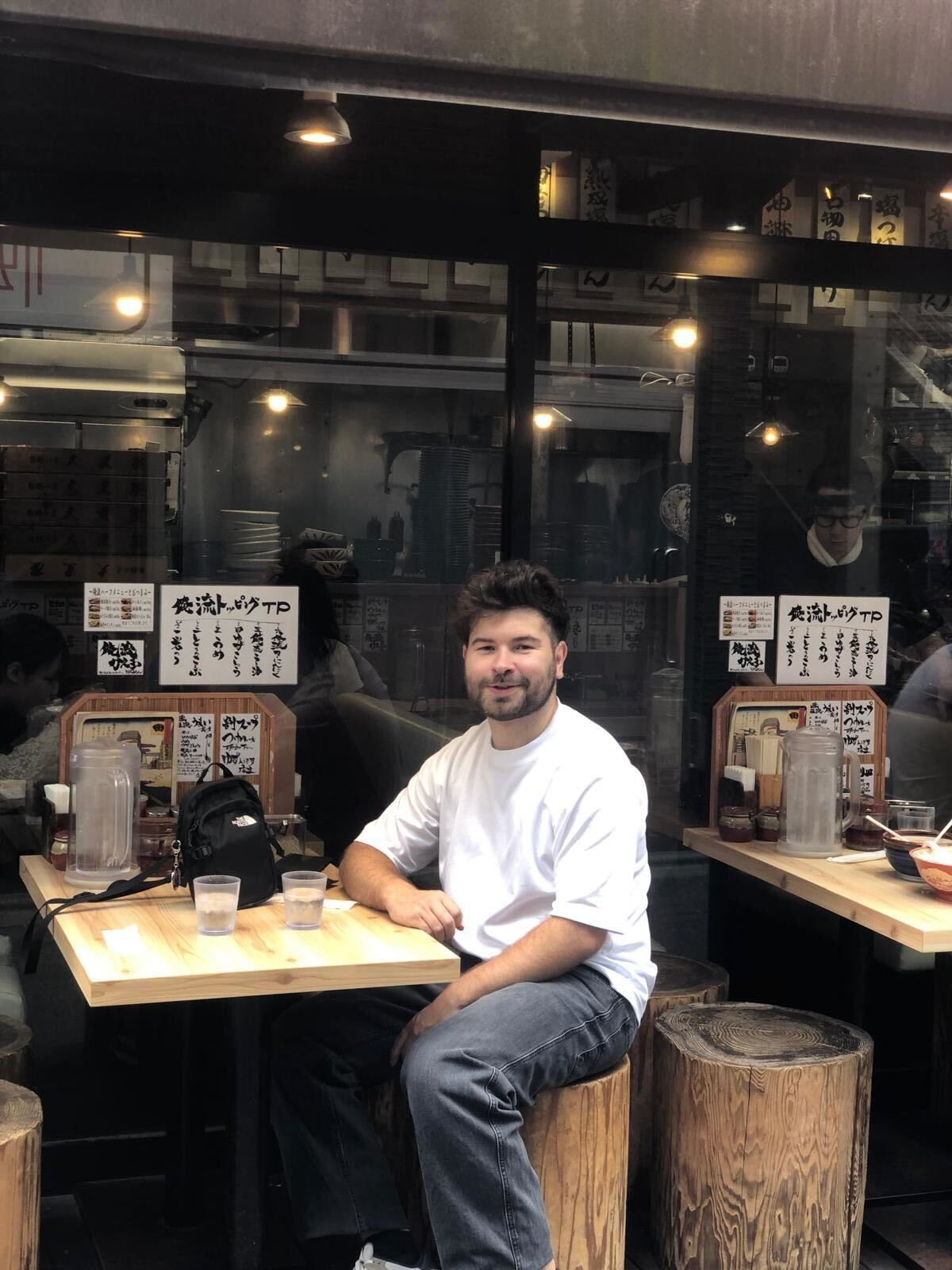
Hugo, 26, arrived in Tokyo in October 2025. He's a fullstack developer at Abbeal on an e-commerce mission with a deliberately old-school stack: IBM HCL Commerce, Java on the back, JSP on the front. Before Tokyo: 3 years on a work-study program at Toyota Motor Manufacturing France. That experience lit the fuse.
Why Japan, and when to take the leap
"Through my work-study experience, I spent 3 years at Toyota Motor Manufacturing France. I discovered Japanese working methods but also the culture, thanks to people coming over from Japan to help us develop processes inside the company."
The goal of going abroad was already there. The Toyota experience confirmed that Japan was the right place. Abbeal's presence in Japan did the rest: after 1 year at the company, the Tokyo opportunity came up. Hugo jumped.
Working hours with a French mission
Hugo works on the same hours as his colleagues in France. Agile methodology helps: the rituals (daily, refinement, sprint review) happen at fixed times, easy to plan from Tokyo. For one-off meetings, the team plays along: they're scheduled rather early in the morning or early afternoon France-side, so it's not too late in Tokyo.
How he convinced the client
No pitched battle. Hugo already had 1 year on the mission with this client and a track record of quality. He was already mostly remote (1 day at the office per week). Working from Tokyo rather than from home didn't change the quality of work delivered. And the VIE status brings benefits on the company side. Everyone came out a winner.
What this model brings
"VIE is an opportunity that, beyond letting us work abroad, lets us discover a new country, a new culture. In Japan, work culture is a big topic. Continuing to work for a French company lets me keep a comfort zone. Thanks to that, I can more easily focus on discovering the country and use this opportunity to grow as a person."
The limits
Just one, but it's real: working with a French company means you don't practice your Japanese day to day. Abbeal funds private lessons once a week — that helps. But to really progress, you have to make the effort to meet people outside work. Otherwise the Japanese experience stays partial.
His advice
Motivation is factor number one. The first month isn't easy — it's a new rhythm to settle into. But if, like Hugo, Japan is a clear goal and you take the time to explore outside work, the model clicks very fast.
— Hugo, fullstack developer at Abbeal, on a VIE in Tokyo since October 2025.
// Read next
Mobbeal
Learning Japanese in Tokyo after JLPT N2: my daily routine.
No magic bullet to learn a language. Anki, WaniKani and Bunpro: the three tools I use daily to keep progressing in Japanese from Tokyo, on top of the private lessons Abbeal offers me.
5 min
Mobbeal
3 years in Tokyo: Alex, Senior Software Engineer, how he lives his 7-8h time gap.
8 years of dev, 3 years in Japan. Alex works on French hours (2pm-midnight Tokyo), with negotiated flex after 6 months. How he convinced his client ("6 months to see"), and why it's been running for 3 years.
6 min
Mobbeal
Where to live in Tokyo? My top 5 (subjective, no apologies), by Sébastien Lonjon.
After more than a year in Tokyo, Abbeal's CEO shares his 5 favourite neighbourhoods: Kōenji (punk), Shimokitazawa (slow indie), Kichijōji (park + postcard), Daikanyama (discreet chic) and his #1 Jiyūgaoka — where he lives with his family (nature, international schools, Shibuya access).
6 min
Mobbeal
Working Holiday Tokyo: Kevyn, mechanical engineer at Amplitude Laser, 1 year in Japan.
26 years old, high-energy laser mechanical engineer. Left on Working Holiday then switched to work visa. The 7-8h gap becomes an asset: his Tokyo nights = France days, urgent topics unblock in continuity. Plus a Shinto anecdote on lunch break.
6 min
Mobbeal
My top ramen in Tokyo: 4 spots that put me back in my place.
Abbeal's CEO shares his current top: Hujishiro (classic, no frills), Menya Kokoro (signature mazemen), Afuri (delicate yuzu shio), Tamotsu (deep broth, seasonal duck). Plus a #1 kept for direct contacts.
4 min